

This shift toward a Philippines 4-day workweek began on March 7, 2026, when President Ferdinand Marcos Jr. signed a decree addressing this issue.
As part of this decree, all the organizations and agencies under the executive branch of the government in the Philippines have started to adopt the compressed 4-day workweek schedule.
If you’re managing a remote team in any country across the globe, this news is very significant for you.
Why the Philippines Adopted a 4-Day Workweek
Discussions around the 4-day workweek are often anchored on employee well-being, employee burnout, and work-life balance. Good intentions, definitely. However, there was an exception in the Philippines.
What made it happen? The rising costs of oil and energy.
Operating five days a week increases electricity, fuel, commuting, maintenance, and building costs. By switching to the 4-day workweek system, the government saves money without compromising productivity.
This makes the decision even stronger. When a government adopts a 4-day workweek for economic reasons, not popularity, it sends a clear message: it works.

This Is No Longer Experimental — Governments Are Making It Law
The Philippines didn’t jump into the unknown. They jumped into a growing body of evidence.
Between 2015 and 2019, Iceland carried out one of the biggest trials in history. The results? Stable or increased productivity. Approximately 86 percent of the Icelandic workforce today is either put on shortened hours or can demand them. No longer a trial, that is a national norm.
Belgium went further. In 2022, Belgium was the first European nation to make it legally possible to allow workers the option of compressing their working hours into four days without pay. This isn’t optional—it’s now the law.
In 2022, a six-month trial was conducted by the United Kingdom involving 61 companies. The figures cannot be overlooked:
- There was an average increase in revenue by 8%.
- Resignations dropped significantly.
The majority of workers (70 percent) indicated that they would require a 10-50 percent increase in their pay to revert to the five-day schedule.
That latter number is the one executives must ponder. After working four days instead of five, it seems like a downgrade to go back to five days.
In Japan, which is not viewed as a nation of reducing work schedules, big companies such as Panasonic, Hitachi, and even the government have been pressured into four-day work schedules.
In 2022, the UAE became one of the first Gulf countries to allocate its public sector to a 4.5-day work week.
The Philippines 4-day workweek is no exception. It’s part of a global wave. And it is not merely governments looking at it, but driving it.

What This Means for Global Teams
This matters even more if you manage teams under the Philippines 4-day workweek model or if you are working with partners in Southeast Asia who belong to other time zones.
However, there is something else you need to answer as a team leader aside from the practical issues.
If the Philippine government can pull off four working days within an entire executive department of its own, what makes you think that it won’t work for you?
The real issue is trust.
It’s not about trusting the idea—it’s about trusting the data. “How do I know if my employees are indeed working efficiently in only four days?”
These are all legitimate questions that deserve answers.
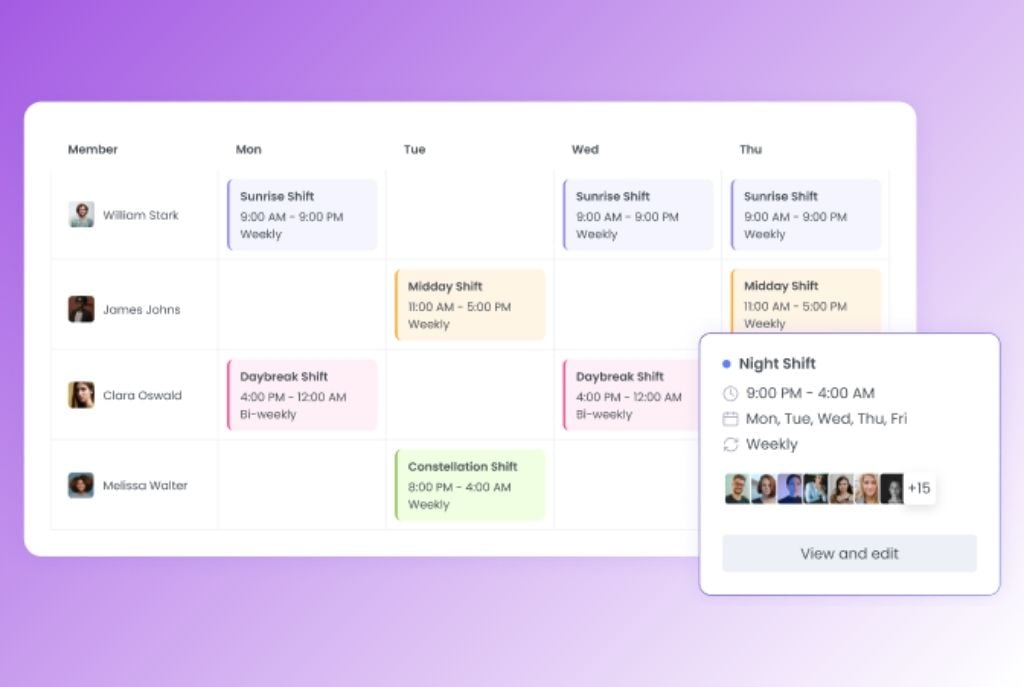
Why WebWork’s Data Features Matter When You Compress the Workweek
This is exactly where the Philippines 4-day workweek becomes a real business challenge for global teams. When you move from five days to four, the first thing that breaks isn’t productivity — it’s trust. Managers can’t see what’s happening, and that invisible gap turns into anxiety, micromanagement, or worse, the whole pilot gets canceled before it gets a fair chance.
WebWork closes that gap with three things that actually matter:
Activity Levels — Are People Truly Working or Just Logged In?
The difference between the state of being online and being actively working is very large. The level of activity in WebWork is measured by real activity on the computer keyboard and mouse every hour. It clearly shows whether employees were actively working during their scheduled hours.
The same applies to the lesser number of days of work in a week. In a compressed schedule, every hour matters. If an employee is only productive for four out of eight hours, that’s a clear red flag.
App and Website Usage: Where exactly are the hours going?
This often surprises managers.
When you believe that your team is heads down when using project tools such as Jira, Notion, and Google Docs, the data may say otherwise. An hour of YouTube video viewing. 40 minutes blindly surfing. Thirty minutes with an application that does not relate to the current project.
WebWork will provide you with insight into the very apps and websites your employees spend time on, clearly categorized into productive, neutral, and unproductive time. In the scenario where workers are working 4 days rather than 5, wasted time reduces efficiency and can lead to missed deadlines.
It can be used in self-correction as well. The majority of the people are not lazy; they are merely unaware. As soon as an employee reads his/her weekly report and finds out that he/she was spending three hours on unproductive applications, he/she will change and will not need a manager to do it.
Time Per Task — Is Work Getting Done Faster, Slower, or the Same?
This is the measure that will determine the success or failure of your 4-day workweek pilot for leadership.
With WebWork, you can track the amount of time a certain task or project actually took, rather than what it was estimated to take. Thus, in your pilot project, you have an opportunity to evaluate: Are the tasks performed in the same amount of time as they were before, or has the situation changed somehow?
If a certain task that used to require three hours suddenly requires five, there is something that must be adjusted, whether that is scheduling issues, a personal issue, or misallocating tasks. You can do this since you can spot it.
In contrast, if the process is more effective and tasks are being performed much quicker with more focus, there is no need to argue, since this is the evidence to present to the executive doubter.
Put Together, These Three Things Do One Job: They Replace Gut Feeling With Proof.
Failure of the pilot of 4-day weeks is not due to the failure of the concept per se, but rather the inability to demonstrate results, forcing the company to drop the pilot.
WebWork lets you see what happened from point A to point B in figures. Productivity was X; now at Y. The time spent completing tasks has been reduced. App usage during nonproductive activities was minimized due to time tracking awareness.
It’s not about surveillance; it’s about accountability for everyone.
Running a Four-Day Week Pilot the Right Way
If you’re thinking about testing a compressed schedule for your team, here’s a simple approach that works:
- Step 1: Establish a baseline first: Do nothing different for the moment, but monitor your performance in WebWork for two to four weeks. Record how you spend your time and what is taking up most of it.
- Step 2: Define the compression method: Decide on a 4×10 (four 10-hour working days) or 5×8 into four productive days. Clarify on which particular day there will be rest, and if this day can vary.
- Step 3: Conduct the pilot program for two months. It must last this long; otherwise, you won’t get enough data. Try out your new scheme for two months to gather enough observations from at least one whole project cycle.
- Step 4: Analyze results: You don’t need a statistician for this; all data will be available in reports provided by WebWork. Measure productivity before and after introducing new changes. Study time spent on tasks, focusing periods, and applications used.
- Step 5: Base decisions on facts: No more guessing. Take your productivity metrics and make the appropriate decisions.
This is how the 4-day workweek stops being a leap of faith and starts being a business decision.

The Philippines 4-Day Workweek Is a Signal, Not an Outlier
When a government of 115 million citizens makes a structural adjustment to the way work is conducted, this sends a message to all employers in the region—and beyond.
The Philippines 4-day workweek is not the only domino. It could be the tipping point of all of Southeast Asia. Countries like Indonesia, India, and Vietnam are watching closely. So do multinational corporations that have their teams in Manila, Cebu, and the rest of the archipelago.
In the case of global teams, it is no longer a matter of whether we should consider this; it is a necessity. The question is, when and how do we do it right?
The response to this question of when is most likely earlier than you think.
The response to the question “how” is having the right data behind you.
Final Thought
The 4-day workweek was once a start-up benefit. Then it was a trial. It is now law in Belgium, standard practice in Iceland, and executive policy in the Philippines.
The world isn’t going back.
If you want to stay competitive in hiring, retention, and productivity, then you must begin to take this seriously. Not blindly, but actually measured.
WebWork provides you with that measurement. It removes the “I hope this works” out of your pilot and puts in its place, “Here is how the data tells us.”
In 2026, good ideas aren’t enough—measurable results are. If you’re planning to test a Philippines-style 4-day workweek, don’t rely on assumptions. Use real data to guide every decision. WebWork gives you the visibility to track productivity, optimize performance, and prove what actually works.