The contemporary work environment has seen a revolutionary change, which has radically altered the way organizations handle their workforce. The role of advanced employee monitoring solutions has never been more important as we move through 2026. Employee monitoring software features in 2026 are no longer optional but a mandatory requirement for businesses seeking a competitive advantage and to be able to keep distributed teams, keep the data safe, and achieve favorable operational efficiency. WebWork has established itself as a leading player in the industry by developing a cutting-edge platform that provides advanced monitoring solutions essential for today’s complex work environments.
Key trends influencing employee monitoring software in 2026.
In 2026, the employee monitoring industry is shifting away from invasive tracking toward intelligent, supportive systems. Tougher privacy laws, including improved GDPR and new AI legislation, are forcing suppliers to focus on data security and staff approval. The hybrid work model remains dominant, with 78 percent of businesses using some form of monitoring to manage distributed teams. AI is leading the pack, refining simple analytics into predictive AI, which anticipates burnout, behavioral tendencies of employees, and workflow automation. However, two out of three employees oppose overly intrusive AI surveillance, making a balanced approach essential.
The other significant trend is the incorporation of monitoring with larger HR ecosystems. The tools are now unified with the payroll, performance management systems, and project systems to give holistic views that alleviate the administrative load and make decisions based on data. Privacy-first design is non-negotiable, and features such as explicit consent tracking, data minimization, and role-based access controls should be standard to prevent risks of abuse. Also, there is the advent of biometrics and gamification, but this is done with restraint so as to avoid the ethical trap holes. Altogether, the aim of 2026 is to implement monitoring in a non-controlling way but to provide positive employee experiences by means of real-time insights, workload balancing, and personalized growth prospects.
Basic Employee Monitoring Software Requirements in 2026.
Employee monitoring software that succeeds in 2026 must offer advanced features that go far beyond basic activity logging. Below is a detailed explanation of the most critical features, including their use cases, benefits, and limitations.
1. AI-Powered Time Tracking and Attendance Monitoring
At the heart of any monitoring tool is robust time tracking, but in 2026, it’s supercharged with AI for automation and accuracy. This feature automatically logs clock-in/out times, breaks, overtime, and shifts using activity detection from keyboards, mice, or even device sensors. For instance, AI can distinguish between active work (e.g., typing in a document) and idle time (e.g., a paused screen), generating precise timesheets ready for payroll integration.
Advanced systems also support offline tracking for field workers through GPS or mobile apps, syncing data once they reconnect online. This is crucial for hybrid teams, where employees might switch between office and remote setups. Benefits include reduced manual entry errors—saving hours weekly and compliance with labor laws through automated overtime alerts. However, privacy is key: tools should allow employees to pause tracking during personal time and provide transparent logs. Without transparency, monitoring can foster distrust; with proper controls, it empowers self-management, like reviewing personal productivity trends.
2. App and Website Usage Tracking with Productivity Scoring
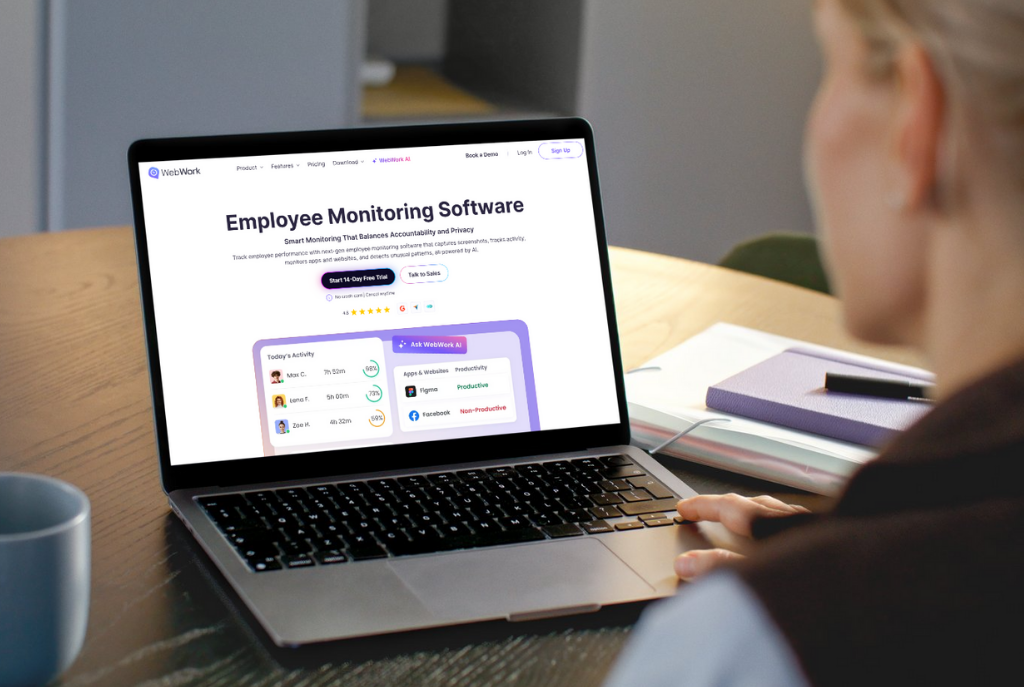
This feature monitors which apps and websites employees access, categorizing them as productive (e.g., project management tools like Jira) or unproductive (e.g., social media during core hours). In 2026, AI enhances this by analyzing context, flagging excessive context-switching that leads to fatigue, and assigning custom productivity scores based on company-defined rules.
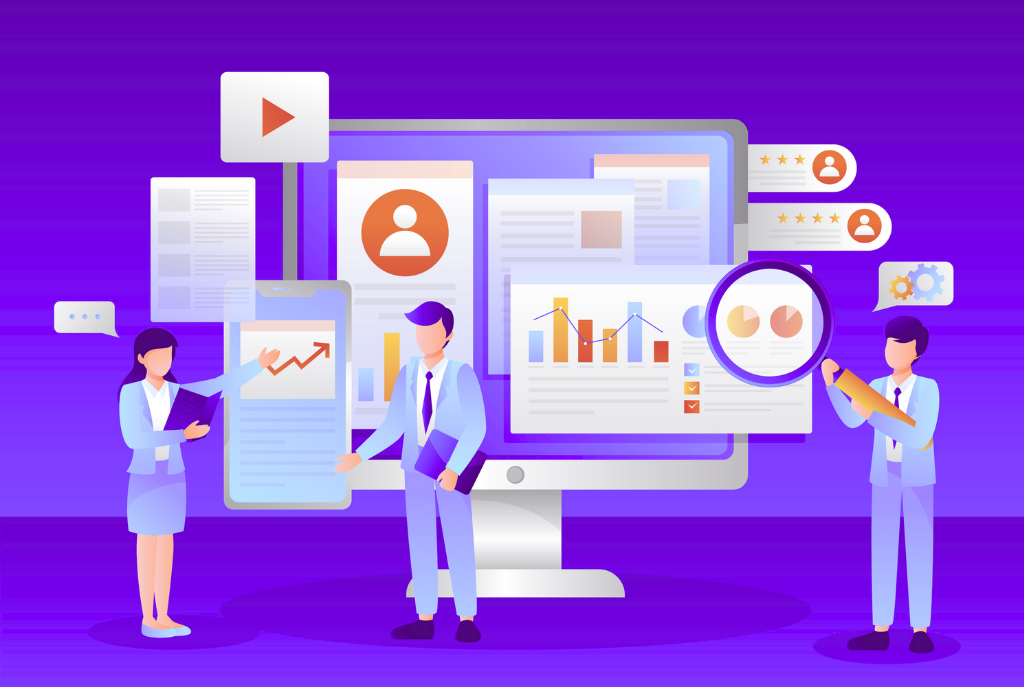
Detailed reports break down time spent on each app or website, with heatmaps highlighting peak usage periods. For example, if an employee spends 40% of their day on email, the software might suggest automation tools to reclaim time. Integrations with browsers ensure seamless data capture across devices. The advantage is identifying bottlenecks, such as over-reliance on inefficient apps, leading to targeted training. One drawback is that rigid categorizations may incorrectly label creative or research-related browsing as unproductive, so customizable rules and employee feedback loops are essential for fairness.
3. Screenshot and Screen Activity Capture
Periodic screenshots or video recordings provide visual verification of work without constant oversight. In 2026, options include random intervals, blurred modes (to obscure sensitive info), manual triggers, or full playback of activity timelines, supporting multi-monitor setups.
In practice, this helps verify task focus, e.g., confirming a designer is using Adobe tools during billable hours, while privacy controls let employees delete or pause captures with explanations. AI can even analyze screenshots for anomalies, like unauthorized file sharing. Benefits extend to coaching: managers can review sessions to offer constructive feedback. However, ethical use is critical; without consent, it feels invasive. Best implementations include visible indicators (e.g., a tracking icon) and storage limits to comply with data protection laws.
4. Intelligent Real-Time Activity Monitoring
At the heart of any effective monitoring solution lies robust real-time activity tracking. However, the employee monitoring software features 2026 demand goes far beyond simple observation. Modern systems like Webwork employ artificial intelligence and machine learning algorithms to understand context, recognize patterns, and differentiate between productive and unproductive activities with remarkable accuracy.
The real-time dashboard provides managers with instant visibility into team activities without requiring invasive constant surveillance. Webwork’s intelligent tracking system categorizes activities dynamically, understanding that what constitutes productive work varies significantly across departments, roles, and individual responsibilities. For instance, a graphic designer spending time on design inspiration websites is engaged in legitimate research, while the same activity might be considered unproductive for a data entry specialist.
This contextual intelligence reduces false positives and delivers meaningful insights instead of overwhelming managers with unnecessary data. The system learns from corrections and feedback, continuously improving its accuracy and reducing the administrative burden on supervisors.
5. Integrations, Reporting, and Compliance Tools
The convergence of monitoring and project management represents a significant advancement in employee monitoring software features 2026. Webwork eliminates the need for separate project management tools by incorporating robust task assignment, progress tracking, and resource allocation features directly into the monitoring platform.
Employees can log time directly to specific tasks and projects, providing unprecedented visibility into how organizational resources are allocated across initiatives. Project managers gain real-time insights into project health, can identify at-risk deliverables before they become critical problems, and make data-driven decisions about resource reallocation.
The integrated approach eliminates data synchronization issues that plague organizations using separate monitoring and project management systems. Time tracked automatically updates project budgets, task completion triggers workflow automations, and resource utilization data informs capacity planning.
Gantt charts, kanban boards, and calendar views provide multiple perspectives on project status, accommodating different management preferences and project types. Dependencies between tasks ensure realistic scheduling, while workload balancing features prevent employee burnout by identifying overallocation before it impacts performance or well-being.
Focus on WebWork: A top brand in 2026.
WebWork stands out as a leading AI-powered all-in-one solution for hybrid and remote teams. WebWork has affordable pricing that does not sacrifice privacy, as it is priced at $3.99 per user/month, which is a combination of time tracking, monitoring, and management.
Specifically, WebWork is an AI that automates time capture, which is used to recognize activity to construct precise timesheets, with flexibility options being made through manual overrides. Its screenshot option provides employees with blurred, random, or manual options, which allow them to control it and make it ethical. The analysis of productivity will be thorough: AI monitors the work on apps/sites, determines the level of activity, and involves an agentic AI assistant to summarize daily reports, identify burnout, and propose individual interventions, such as reallocation of tasks to avoid overworking.
WebWork is also good at integrations, including PayPal, Stripe, and Deel, to utilize them in payroll and other project management tools such as Jira or Slack. The Jira time tracking integration goes further: hours track on the Jira work item itself and return as a native worklog with activity scoring attached. Shifts, PTO, and holidays are automatically managed, and employee attendance monitoring features can be easily accessed through mobile/web/desktop access. Users consistently praise WebWork for its ease of use and reliability, as the tool simplifies work practices among agencies and freelancers. Relative to such competitors as Hubstaff or Teramind, WebWork is better positioned in its emphasis on AI-powered insights and affordability, which makes it the best fit for growing companies that require features of employee monitoring software that are comprehensive without complexity in 2026.
Best Practices in 2026: How to monitor employees.
Transparency is the most effective way to maximize the benefits of employee monitoring. Explain policies, seek concessions, and engage employees in tool choice. Grow, not punish, with data. Focus on trends and coaching. Review compliance regularly and make amendments as per feedback to ensure trust. Lastly, adopt scalable privacy-conscious tools such as WebWork to streamline the ethical regulations in 2026.
Conclusion
Organizational aspects when testing the attributes of employee monitoring software in 2026, a company should look beyond technical requirements to consider cultural fit, support during implementation, and long-term scalability. WebWork is unique in offering robust features built on transparency, respect, and trust, respect, and mutual good between employers and employees.
An optimal monitoring system must increase work efficiency and safety as well as create a healthy working environment. By selecting such platforms as Webwork that consider the balance between control and independence, an organization can fulfill its monitoring goals without sacrificing the satisfaction, involvement, and confidence of its employees.
Since the dynamics in the workplace keep on changing, the nature of the monitoring systems that organizations adopt currently is going to determine the effectiveness of their operations and their health culture in the coming years. The investment in sophisticated solutions that respect the employees’ preconditions, the prosperity of organizations in the more complicated world of modern working management.