

What have you done all week?
This is the question many employees face at the end of every work week as they open their timesheets.
Timesheets were originally designed for a simpler purpose: to record attendance, calculate pay, and comply with labor laws. Some companies still use timesheets this way. Employees clock in and out, log eight hours per day, and add overtime work or absences as needed. This is then submitted to HR at the end of a pay period.
In this case, timesheets ask: Where were you?
But for knowledge-based, project-driven, and remote workplaces, the question becomes: How did you spend your time?
The answer varies per team member, who has their own working styles, roles, and assignments. And when a company relies on manual or semi-manual timesheets, especially for project or task-based work, employees are left to track time in their own ways, including:
- Reviewing browser history, emails, chat logs, and other digital timestamps
- Using work calendars not only for meetings but for task scheduling, including ‘time-blocking’ to protect their focus
- Documenting work immediately after completing a task, either directly to the timesheet or their notes
- Dedicating half-day or full-day blocks to a single project, making time-tracking simpler
- Estimating hours based on memory or output, especially for procrastinators with late timesheets
Some of these methods are more prone to error. When filling out timesheets, employees tend to round off work hours, overestimate tasks, or underestimate interruptions—not necessarily out of dishonesty, but as a response to a system where time-tracking is not integrated into the workflow.
Once you multiply that across individuals, teams, and budgets, the inaccuracy becomes apparent.
It’s the first and most common timesheet mistake: asking people to reconstruct their work activity from memory.
Mistake # 1: Treating Memory as Data
Many employees tend to put aside timesheets in favor of more important work.
They review documents, respond to messages, switch tools, and shift their focus throughout the day, or sometimes even within an hour alone.
Then, for compliance’s sake, they fill out their timesheets, no longer remembering what they did after a busy week.
How do they measure most of the work they did in neat time blocks? How do they quantify the urgent email that suddenly arrived mid-task, a work crisis they had to address as soon as possible, or a teammate who suddenly asked for help with something?
Manual and semi-manual timesheets demand employees to report productivity in this manner, without a proper system that can do it for them.
Some employees also tend to overestimate their productivity. They remember accomplishing a lot within the day, but many of these tasks might be shallow work—answering emails, organizing files, or attending meetings. There are times where some team members fail to do the deep work required to finish milestones and to move the project forward.
Mistake # 2: Rewarding Optics Over Accuracy
Employees learn what is acceptable to report and what should be left out in the timesheet.
For example, some employees choose not to disclose overtime hours or excessive time spent on a single task, fearing their leaders might see them as inefficient. This can make leaders unaware that their team members are already struggling with burnout or excessive workload.
On the other end, some employees may inflate their hours. This behavior is likely in high-reward and high-visibility projects. Timesheets become a way to demonstrate effort or to align on expectations, even if the actual work does not reflect it, or if most of the credit should go to other team members.
The data then becomes unreliable for assessments such as work appraisals and promotions.
False reporting can also happen when employees underwork, logging two hours of client work when they left the office 20 minutes early. In their minds, it was only 20 minutes. There was no need to disclose the gap.
Outdated timesheets reflect the socially acceptable middle that attracts the least attention from managers, even if there is a cause for concern.
Mistake # 3: Viewing Timesheets as Mere Compliance
For many companies, timesheets exist primarily for compliance, such as payroll processing, client billing, audits, or internal controls. Timesheets become nothing more than a formality.
A number of employees might also be unaware of why timesheets matter in the first place. They round off hours, compress tasks, or smooth inconsistencies, assuming small inaccuracies have no real consequence. To them, online timesheets tracker are just another administrative requirement.
By viewing timesheets as mere compliance, organizations miss out on a wealth of data and insights into how people work and how teams operate.
Time-tracking platforms like WebWork allow companies to answer questions that most manual timesheets cannot: What happens within a single workday? Are there delays and bottlenecks? Which teams are overworked and which are underutilized?
These questions are more insightful than whether the whole team was at work for the entire eight hours.

Better time-tracking solves a basic mismatch: Most work is fluid, non-linear, and prone to interruption.
Instead of asking employees to remember what happened, companies need to invest in a system that observes work activity as it happens–quietly, passively, and without demanding constant input.
WebWork’s Employee Timesheet Software does this automatically for companies. It can supply all the details needed in a timesheet, such as 8-5 work shifts, breaks, and inactive periods. As a result, timesheets are completed much faster. Companies do not have to wait for each employee to submit their timesheets at the end of the pay period.
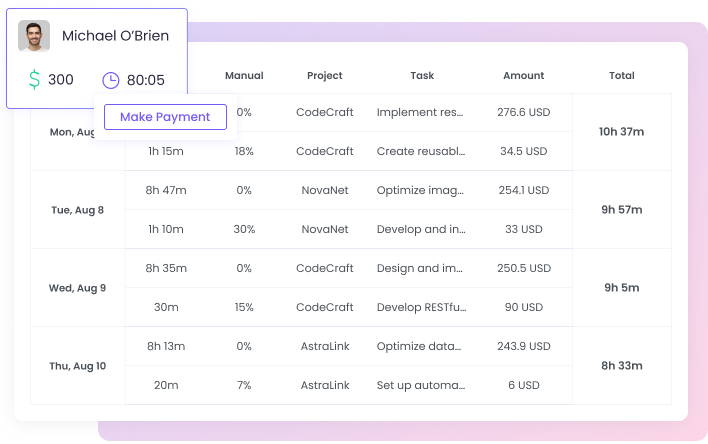
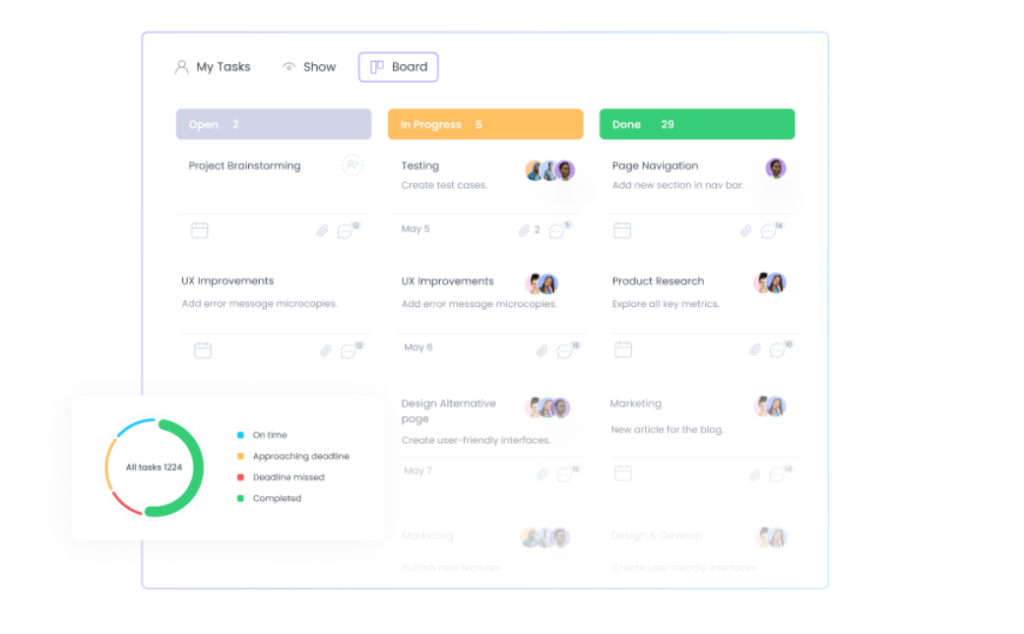
But more than simple time tracking, WebWork allows organizations to monitor tasks and timelines through the Employee Task Management System. It automatically records time once employees begin working on a task. This is especially useful for remote teams to stay on top of progress.
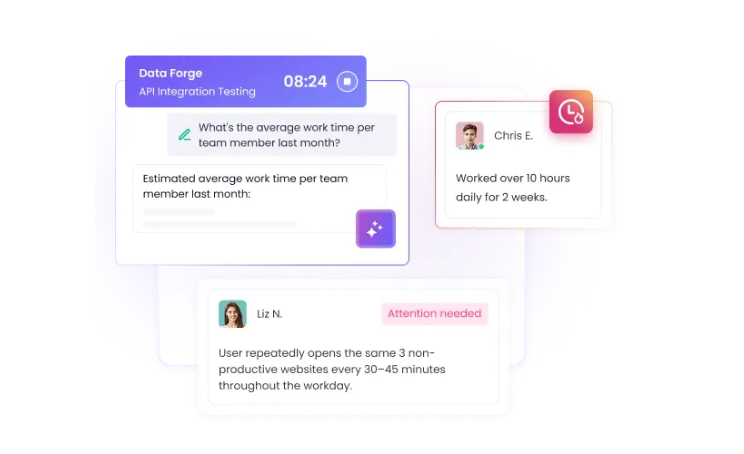
And for those who want an analysis or insight from the numbers, WebWork also does more than track work activity—the platform has AI employee monitoring software that interprets the data. Leaders can simply ask prompts to get immediate and personalized answers on their team’s performance.
With WebWork, employees no longer need to explain their time. Companies already know.