

There is a lesser known reason why start-ups fail.
As many as 90% of start-ups do not make it within the first five years. It’s often because they ran out of money, hired the wrong people, overestimated demand, or got the pricing wrong.
One pain point that is not often talked about is that these start-ups did not know where their time went.
Start-ups are usually small teams, where a single team member is expected to put on multiple hats and do several jobs at once. The founders themselves are split between building the product and running the business. These teams are often remote, and sometimes, scattered across the globe and across different timezones.
It can be difficult to track what everyone is doing and where effort is being allocated, especially when starting a product or service from scratch.
Thus, founders miss out on the dreaded invisible productivity drain. Research shows that the average worker spends 41% of their workday on tasks of little to no value. Knowledge workers specifically waste ten hours a week on unproductive work, instead spending that time on activities such as unnecessary meetings.
For a startup burning through limited runway, these inefficiencies aren’t just wasteful. They are the reason the business ends, fast, and how competition wins.
Why Start-Ups Avoid Time Tracking
Yet, many start-ups tend to hesitate or even outright avoid time-trackers altogether.
Ask any start-up founder, and they will tell you how they take pride in having a mean and lean team that gets things done.
Start-ups are built on trust and autonomy, centered around the classic ‘We value results over work hours’ philosophy. To founders, implementing time-tracking can feel like a bureaucracy, the kind of corporate overhead they left behind, even if the right time trackers complement their results-based approach with data.

Then there’s price. Enterprise time-tracking software costs as much as $30-50 per user monthly. For a start-up of ten people, that costs as much as $6,000 annually–money that could have been allocated for other expenses.
So start-ups settle for spreadsheets and manual timers, or cannot be bothered to track time at all.
As for project management, many start-ups choose not to invest on paid services, and instead maximize free tools. Many of these tools serve a single purpose: They either track time, manage projects or handle billing, but rarely all three.
Other times, these software offer premium features, including AI integration, behind a paywall. AI features that would help start-ups save time and boost productivity, such as automated agents and personalized insights, are locked in enterprise tiers they can’t afford.
And as they scale, they end up lacking a one-stop shop for all their project management needs. Critical functions like client billing, payroll processing, and expense tracking are separate from one another, causing unnecessary friction.
What Start-Ups Need In a Time Tracker
Ultimately, the question for many early-stage companies when starting is: How do we build a system for our team?
There may be a perception that time-tracking is for corporations and companies that value work hours over output, micromanagement over trust and autonomy. But nothing can be further from the truth.
There are time trackers that allow businesses to choose their preferred time-tracking mode, whether it’s automated, manual, and more. There are also time trackers that connect directly to your workflow, which means that payroll, invoicing, and project budgets are also processed in one place.

When it comes to time-tracking, start-ups have different needs than large companies and enterprises, including:
Immediate deployment
Startups do not have the time to configure time-tracking or work productivity software for weeks. They need a platform that works instantly.
Manual configuration, extensive training, or complex processes will slow start-ups down.
AI integration
If there is a business that knows the value of Artificial Intelligence and technological innovation, it is a start-up. The time-tracking software they need should already have AI capabilities built into their base pricing, not locked behind a paywall.
In particular, agentic AI or autonomous agents represent the future of startup operations. Unlike traditional AI that responds to prompts, agentic AI systems can act independently and execute tasks without constant human supervision.
Having AI agents do low-level and administrative tasks is exactly the kind of workflow start-ups need.
Flexibility for rapid change
Early-stage companies shift and change direction constantly. When investing in a time tracker, start-ups should choose an agile system that can support a pivot from one business model to another overnight.
If a time tracker is too rigid or needs to be overhauled each time the team restructures, it may not be the best solution for startups.
Unified project budgeting and expense tracking
Managing one’s burn rate requires seeing payroll and project costs together. When these are found in separate systems, there is more room for error and poor cash management decisions.
A time-tracker with built-in payroll and invoicing features saves startups money because they no longer have to look for separate software for those functions.
Real-time data visibility
When you’re a startup, results should be instant–not something that you wait for quarterly. Startups need to immediately detect if they are burning time on low-value work so they can course correct fast.
Project management features
When building a product or service from scratch, it is crucial for founders to see progress with just one glance. And often, progress is tied to work hours and time.
The best time-trackers do not just record time, but provide context behind it. What tasks have been accomplished? Which tasks are behind schedule? The best time-trackers provide project management features like Kanban boards for maximum productivity.
Privacy first
There are several reasons why privacy is critical for start-ups, apart from building customer trust. These small businesses are often the target of cyberattacks, and one data breach can be fatal to their entire operations. Investors also look for, and sometimes require, strong security and privacy practices. Start-ups should choose privacy-conscious time trackers to meet this need.
Building trust in the team is also crucial. There are time-trackers that tend to lean towards surveillance, while others allow businesses to configure what and how much data is collected based on their needs.
Some startups might find manual time-tracking more empowering, while others would rather automate the process–that kind of flexibility is what startups should look for in a time-tracking solution.

The right price
Affordability will always be a sticking point when startups invest in systems, so they settle for what’s free or cheap while compromising quality or user experience.
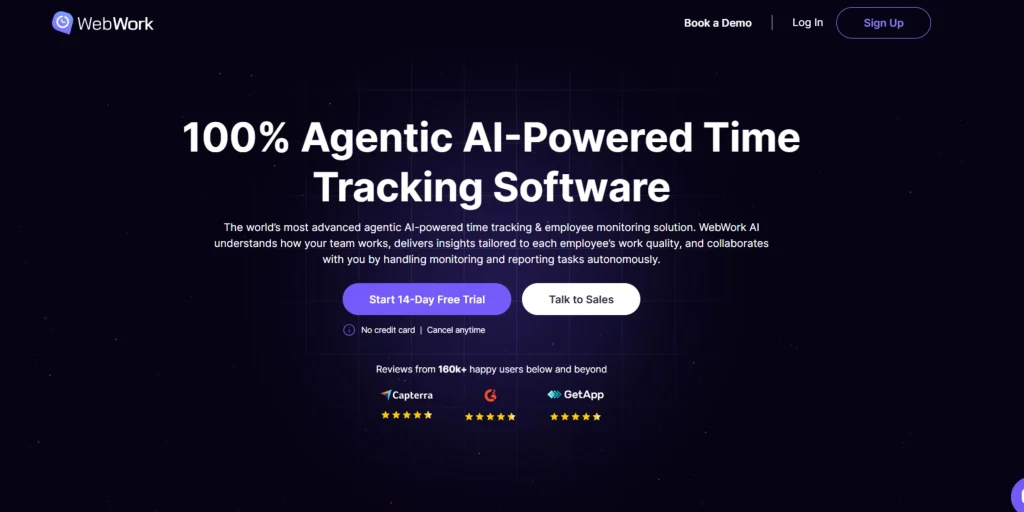
But in time-tracking, the best solutions are not necessarily the most expensive. On top of the list is WebWork.
Starting at only $3.99 per user, WebWork gives you a complete suite of time-tracking features, including project management, payroll, and invoicing.
Between surveillance trackers that monitor every move for $15 to $30, and basic timers that only log hours without insights, WebWork operates in the middle – where you get professional capacities and configurable monitoring at start-up prices.
Don’t let your startup ‘run out of time.’ Invest in a time-tracker now.